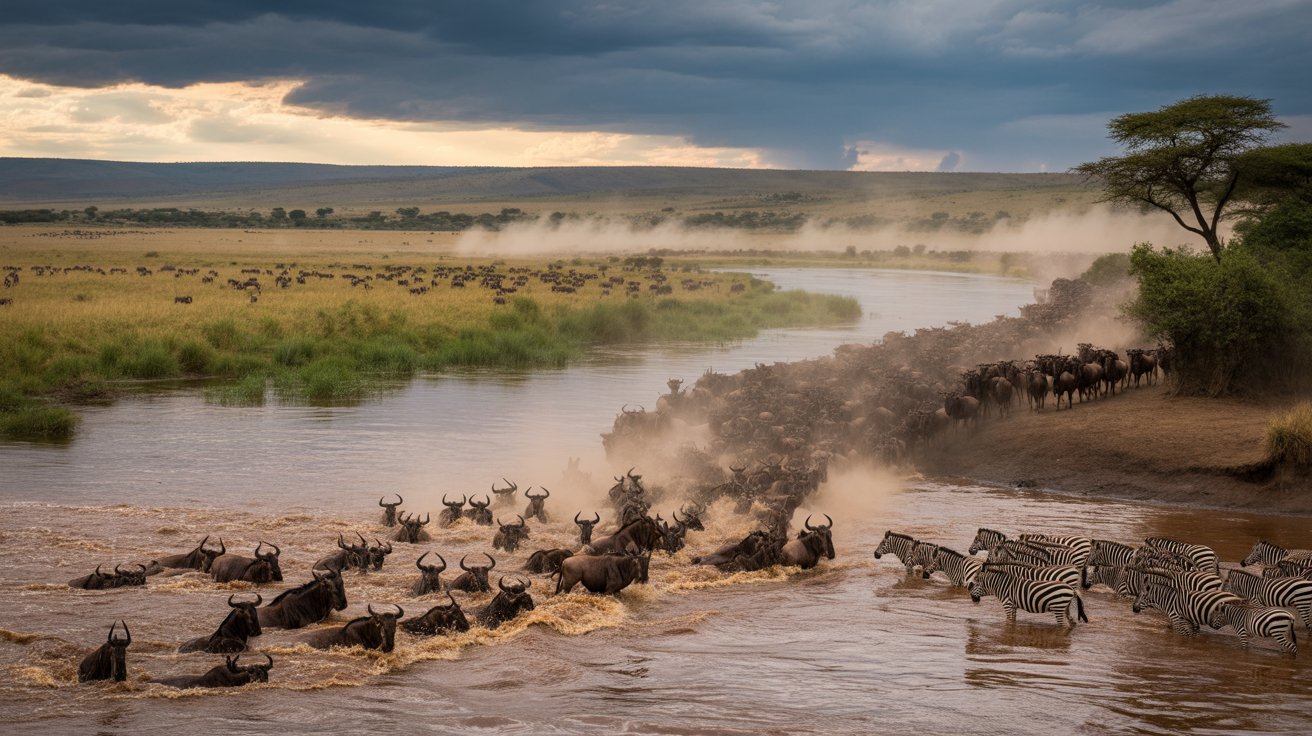
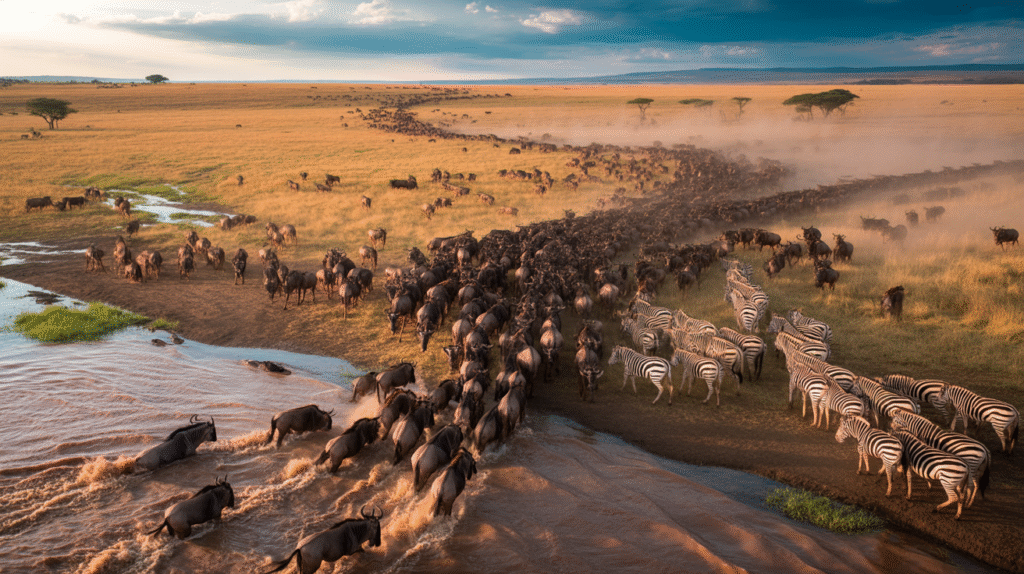
The Great Wildebeest Migration is one of the most spectacular wildlife events on Earth. Every year, over 1.5 million wildebeest, along with hundreds of thousands of zebras and gazelles, move in a continuous cycle across the plains of Tanzania and Kenya in search of fresh grass and water.
Also Read: Is an East Africa Safari Safe for Tourists?
For many travelers, the biggest question is:
When is the best time to see the Great Migration?
The truth is, there is no single “best” month—the migration happens year-round. However, different months offer very different experiences, and the best time depends on what you want to see.
This guide breaks down the migration season by season, so you can choose the perfect time for your safari with East Africa Wild.
What Is the Great Migration?
The Great Migration is a natural movement of wildebeest, zebras, and antelope across the Serengeti–Mara ecosystem.
- Starts in southern Serengeti (Tanzania)
- Moves north through central and northern Serengeti
- Crosses into Masai Mara (Kenya)
- Returns south again with the rains
This cycle is driven by rainfall and grass growth, not by fixed dates.
Best Time Overall to See the Great Migration
June to October is widely considered the best overall period, as it includes:
- Massive herds in motion
- Dramatic river crossings
- Excellent weather and visibility
However, other months offer equally powerful experiences, especially for photographers and those seeking fewer crowds.
January to March: Calving Season (Southern Serengeti)
Why This Period Is Special
- Over 500,000 wildebeest calves are born
- Excellent predator action (lions, cheetahs, hyenas)
- Open plains make wildlife easy to spot
Where to Go
- Ndutu area
- Southern Serengeti
Best For
- Photographers
- Predator sightings
- Fewer crowds than peak season
East Africa Wild Tip: This is one of the most underrated and beautiful times for a safari.
April to May: The Green Season
What Happens
- Heavy rains turn the plains lush and green
- Herds begin moving north
- Fewer tourists
Pros
- Dramatic landscapes
- Lower safari costs
- Excellent birdlife
Cons
- Some roads may be muddy
- Less predictable movement
Best For: Budget travelers and photographers who love green scenery.
June to July: Migration Moves North
Why It’s Popular
- Herds move through central and western Serengeti
- First major river crossings at the Grumeti River
Where to Go
- Western Serengeti
- Central Serengeti
Best For
- Action-packed safaris
- First river crossings
- Dry weather begins
August to October: Mara River Crossings (Peak Drama)
Why This Is the Most Famous Period
- Massive herds cross the Mara River
- Crocodile attacks and high drama
- Dry season = excellent visibility
Where to Go
- Northern Serengeti (Tanzania)
- Masai Mara (Kenya)
Best For
- First-time safari travelers
- Iconic wildlife moments
- Documentary-style experiences
East Africa Wild Tip: River crossings are unpredictable but unforgettable.
November to December: Return to the Serengeti
What Happens
- Short rains begin
- Herds move south again
- Fewer tourists return
Pros
- Fresh grass and newborn anticipation
- Good photography light
- Lower crowds than peak season
Best For
- Relaxed safaris
- Scenic landscapes
- Value-for-money trips
Month-by-Month Quick Guide
| Month | Location | Highlights |
|---|---|---|
| Jan–Mar | Southern Serengeti | Calving & predators |
| Apr–May | Central Serengeti | Green season |
| Jun–Jul | Western Serengeti | First river crossings |
| Aug–Oct | Northern Serengeti / Masai Mara | Mara River crossings |
| Nov–Dec | Central/Southern Serengeti | Return migration |
Kenya vs Tanzania: Where Is Better for the Migration?
Tanzania
- Longer migration season
- Calving season occurs here
- Larger protected areas
Kenya
- Famous river crossings
- Higher density of wildlife
- Shorter migration window
East Africa Wild Recommendation: Combine both countries for the ultimate experience.
Frequently Asked Questions (FAQs)
Is the migration guaranteed?
The migration always happens, but exact locations change based on rainfall.
Are river crossings guaranteed?
No. They are unpredictable, but experienced guides greatly increase your chances.
Is the Great Migration crowded?
Peak months (Aug–Sep) can be busy, but East Africa Wild selects quieter camps and private routes.
Is the migration suitable for families?
Yes, especially during calmer periods like January–March.
Final Thoughts
The best time to see the Great Migration depends on what kind of experience you want:
- Calving & predators: January–March
- River crossings: August–October
- Fewer crowds & value: April–May or November
With expert planning and local knowledge, East Africa Wild ensures you’re in the right place at the right time—maximizing your chances of witnessing this once-in-a-lifetime spectacle.