Planning an East African safari is an exciting adventure. From watching the Great Migration in the Serengeti to seeing gorillas in Uganda’s rainforests, this journey promises unforgettable memories. However, before packing your bags and camera, one important step should never be ignored: your health preparation.
Many travelers ask:
What vaccinations are required for an East Africa safari? Are they mandatory? Are they really necessary?
The short answer is: yes, vaccinations are very important, and in some cases, they are legally required. Proper immunization protects you from preventable diseases and ensures that your safari remains safe, enjoyable, and stress-free.
This complete guide by East Africa Wild explains all essential, recommended, and optional vaccinations for East Africa safaris, along with practical health tips for travelers.
Why Vaccinations Are Important for Safari Travel
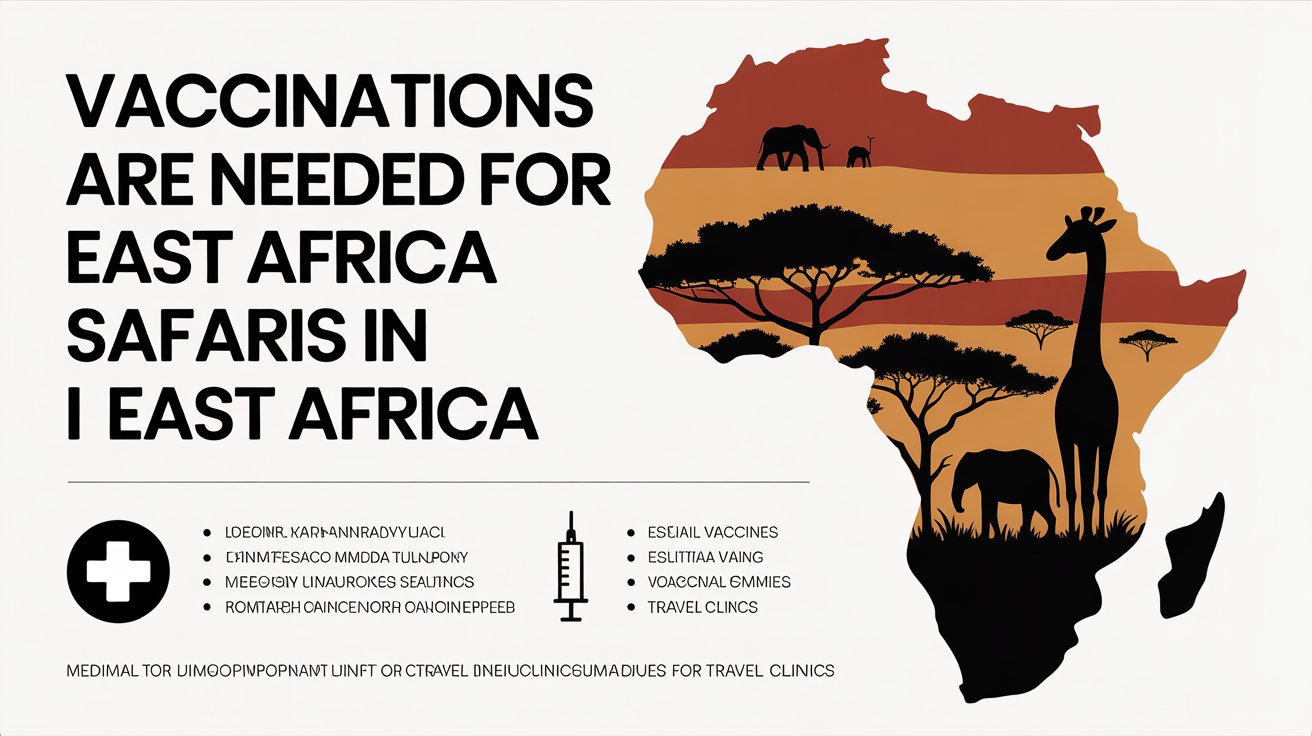
East Africa is generally safe for tourists, but like many tropical regions, it has certain health risks that are uncommon in Western countries.
Vaccinations Help You:
- Prevent serious illnesses
- Avoid trip disruptions
- Meet immigration requirements
- Protect local communities
- Travel with confidence
Many safari destinations are remote, with limited medical facilities. Prevention is always better than treatment.
Countries Covered in This Guide
This article applies mainly to safari travelers visiting:
- Kenya
- Tanzania
- Uganda
- Rwanda
- Ethiopia (select safari areas)
While requirements are similar, they may vary slightly by country.
East Africa Wild always advises checking country-specific regulations before travel.
Mandatory Vaccinations for East Africa Safaris
Some vaccinations are legally required for entry into certain East African countries.
Yellow Fever (Most Important)
Yellow fever is the only vaccine that is commonly mandatory.
When It Is Required:
- If you are arriving from a yellow-fever-risk country
- If you transit through such countries
- In some cases, for direct entry
You will receive a Yellow Fever Certificate after vaccination, which may be checked at immigration.
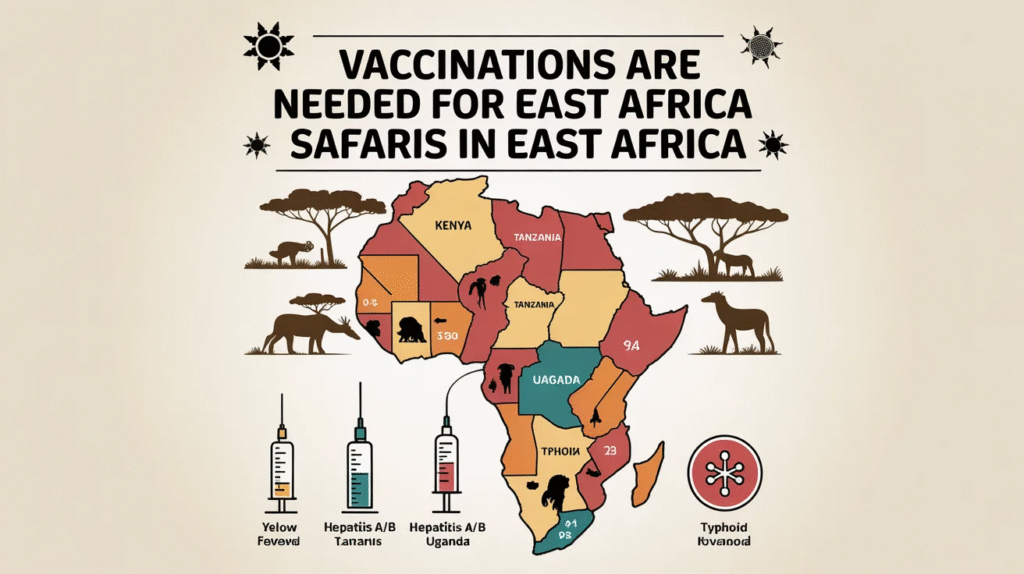
Most countries: Kenya, Uganda, Rwanda, Tanzania
This certificate is valid for life.
Routine Vaccinations (Must Be Up to Date)
Before traveling, ensure your routine vaccinations are current.
Standard Vaccines Include:
- Measles, Mumps, Rubella (MMR)
- Tetanus, Diphtheria, Pertussis (Tdap)
- Polio
- Influenza (flu)
- COVID-19 (if required)
These protect against common diseases that still exist in some regions.
Strongly Recommended Vaccinations
These vaccines are not always mandatory but are highly recommended for safari travelers.
Hepatitis A
Spread through contaminated food and water. Very common in developing regions.
Hepatitis B
Transmitted through blood and bodily fluids. Important for long stays.
Typhoid
Contracted through unsafe food and water. Essential for most travelers.
Rabies (Optional but Important)
Recommended for:
- Long stays
- Children
- Adventure travelers
- Rural visits
Rabies treatment can be difficult to access in remote areas.
Meningitis (Selected Areas)
Recommended in some regions and seasons.
Malaria Prevention (Very Important)
There is no vaccine for malaria in most countries yet, but prevention is critical.
Protection Methods:
- Antimalarial medication
- Insect repellent (DEET-based)
- Long sleeves in evenings
- Mosquito nets
- Air-conditioned lodges
East Africa Wild recommends consulting your doctor for the right medication.
When Should You Get Vaccinated?
Timing is very important.
Ideal Timeline:
- 8–12 weeks before travel: Start planning
- 6–8 weeks before: Main vaccinations
- 2–4 weeks before: Final doses and checkups
Some vaccines require multiple doses, so early planning is essential.
8. Vaccinations for Children and Families
Children traveling on safari need special attention.
Important Points:
- Ensure routine vaccines are complete
- Yellow fever may be required (age restrictions apply)
- Consult pediatric travel specialists
- Carry child medical records
East Africa Wild assists families with health preparation guidance.
Medical Kit for Safari Travelers
Along with vaccinations, travelers should carry a basic medical kit.
Recommended Items:
- Prescription medicines
- Pain relievers
- Anti-diarrhea tablets
- Motion sickness pills
- Bandages
- Hand sanitizer
- Thermometer
In remote parks, pharmacies are limited.
Food, Water, and Hygiene Safety
Vaccinations alone are not enough. Hygiene plays a major role.
Safety Tips:
- Drink bottled water only
- Avoid ice in remote areas
- Eat well-cooked food
- Wash hands frequently
- Avoid street food
Most safari lodges maintain high hygiene standards.
Travel Insurance and Medical Evacuation
Medical emergencies are rare, but preparation is vital.
Make Sure Your Insurance Covers:
- Hospital treatment
- Medical evacuation
- Air ambulance services
- Emergency repatriation
East Africa Wild strongly recommends comprehensive travel insurance.
FAQs
Are vaccinations mandatory for all travelers?
Only yellow fever is commonly mandatory. Others are strongly recommended.
Can I travel without vaccinations?
It is not advised. You risk illness and possible entry denial.
Are vaccines safe?
Yes. Approved vaccines are safe and tested.
Do I need boosters?
Some vaccines require boosters. Your doctor will advise.
What if I forget my Yellow Fever certificate?
You may be denied entry or quarantined.
Can pregnant travelers get vaccinated?
Some vaccines are not recommended. Consult a doctor.
How East Africa Wild Supports Your Health Preparation
At East Africa Wild, we care about your safety before, during, and after your safari.
We help you with:
- Pre-travel health checklists
- Country-specific requirements
- Medical facility information
- Emergency support
- Trusted travel partners
Your well-being is our priority.
Final Thoughts
Vaccinations are a small investment that protects your health and ensures your safari remains memorable for the right reasons. With proper immunization, malaria prevention, hygiene awareness, and insurance coverage, you can explore East Africa with confidence and peace of mind.
Before your journey, consult a travel health specialist, prepare early, and keep your medical documents organized.
With the right preparation and the expert support of East Africa Wild, your East African safari will be safe, healthy, and unforgettable.