
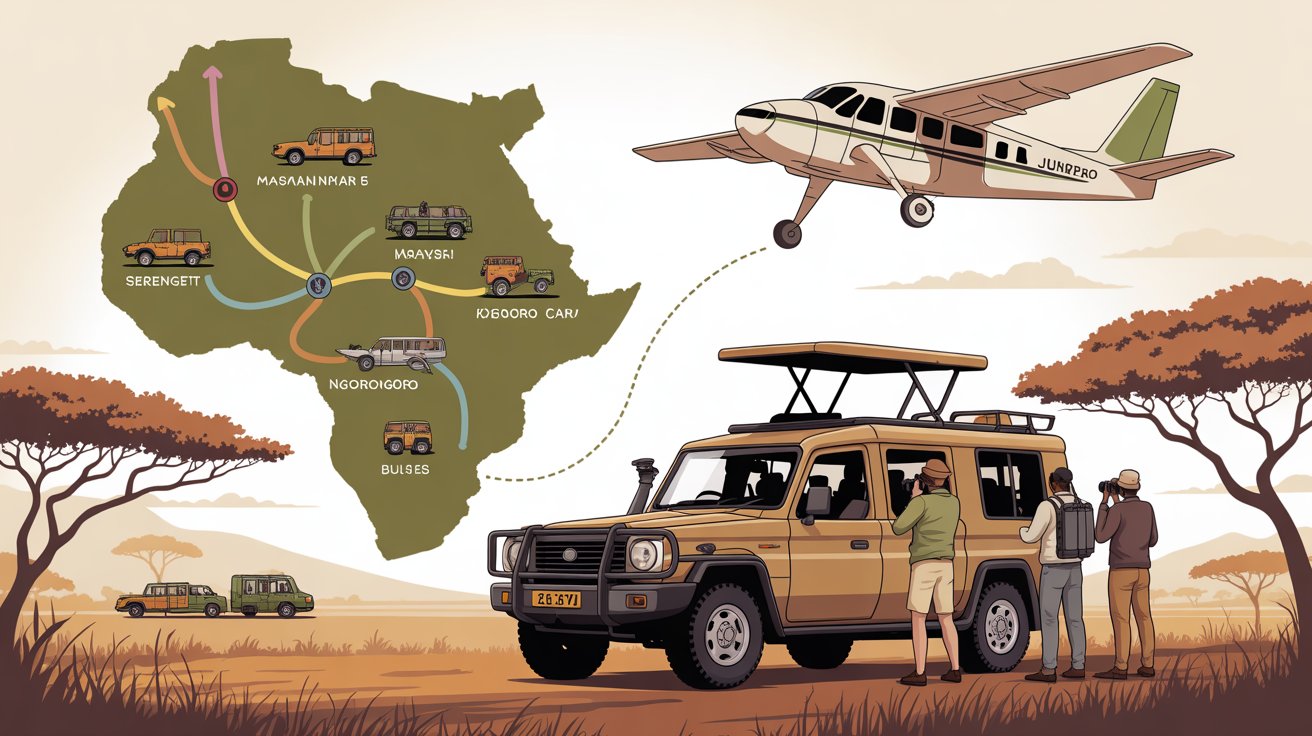
One of the most common questions travelers ask when planning an East African safari is:
How do you actually get from one safari park to another?
East Africa covers vast, wild landscapes, and the way you travel between parks plays a big role in your comfort, budget, and overall safari experience. Fortunately, there are several well-established options—each suited to different travel styles.
This guide explains all the main ways travelers move between safari parks in East Africa, including the pros and cons of each.
Also Read: Where can I see the Big Five in East Africa?
1. Safari Vehicles (Road Transfers)
The Most Common Way to Travel Between Parks
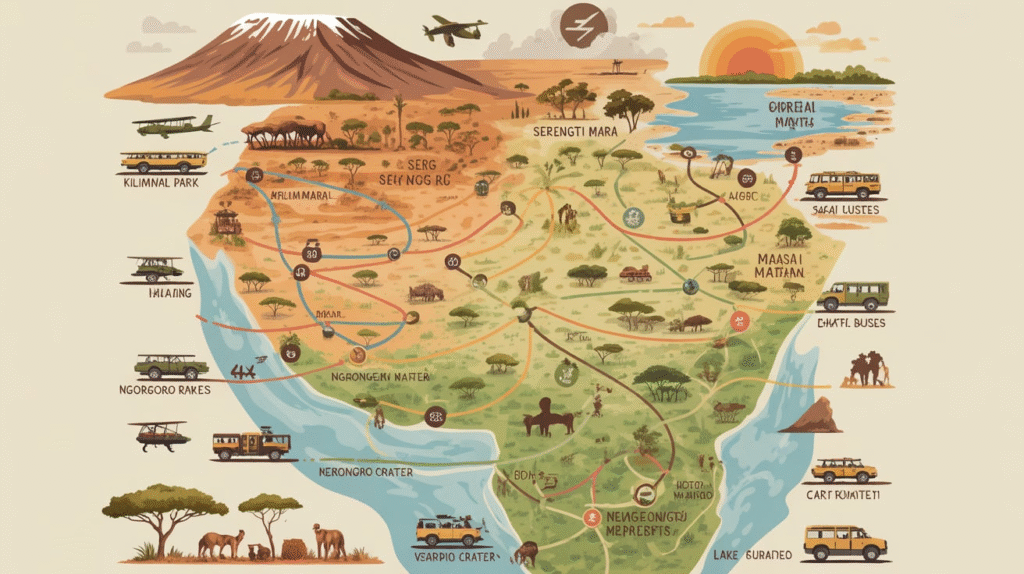
Most safaris in Kenya, Tanzania, and Uganda use custom 4×4 safari vehicles for park-to-park travel.
What It’s Like
- Specially modified Land Cruisers or safari vans
- Pop-up roofs for game viewing
- Travel with your driver-guide
- Wildlife sightings often happen during transfers
Pros
- Flexible schedules
- Wildlife viewing en route
- More affordable than flying
- Great for short to medium distances
Cons
- Long drives on rough roads
- Can be tiring on longer routes
Best For
- Masai Mara ↔ Lake Nakuru
- Serengeti ↔ Ngorongoro
- Amboseli ↔ Tsavo
- Multi-park safaris within one country
2. Domestic Flights (Light Aircraft / Bush Flights)
The Fastest & Most Comfortable Option
For longer distances, travelers often use small bush planes that land on airstrips inside or near national parks.
What It’s Like
- 10–20-seater light aircraft
- Scenic aerial views of savannahs and lakes
- Flights typically last 45–90 minutes
- Luggage limits apply
Pros
- Saves hours (or days) of driving
- Very comfortable
- Ideal for luxury safaris
- Great for covering large distances
Cons
- More expensive than road transfers
- Strict baggage weight limits
Best For
- Serengeti ↔ Zanzibar
- Nairobi ↔ Masai Mara
- Northern ↔ Southern Tanzania
- Time-limited travelers
3. Fly-In Safaris
The Ultimate Hassle-Free Experience
A fly-in safari combines light aircraft flights with game drives in each park.
How It Works
- Fly from city or park to park
- Game drives provided by camps or lodges
- No long road journeys
Pros
- Maximum comfort
- Minimal travel time
- Access to remote, exclusive camps
- Excellent for honeymoons or luxury trips
Cons
- Higher cost
- Less flexibility on spontaneous stops
Best For
- Luxury travelers
- Couples & honeymooners
- Travelers short on time
4. Scheduled Regional Flights
For Crossing Countries or Regions
Major cities and hubs are connected by scheduled domestic and regional flights.
Examples
- Nairobi ↔ Kilimanjaro
- Dar es Salaam ↔ Arusha
- Entebbe ↔ Kigali
Pros
- Reliable for long distances
- Useful for multi-country safaris
- Saves time
Cons
- Requires airport transfers
- Less scenic than bush flights
5. Boat & Water Transfers (Limited but Unique)
In some areas, travel between parks includes boat transfers.
Where This Applies
- Lake Naivasha (Kenya)
- Kazinga Channel (Uganda)
- Rufiji River (Tanzania – Selous/Nyerere)
Why It’s Special
- Wildlife viewing from the water
- Hippos, crocodiles, birds
How Long Does Travel Take Between Parks?
| Route | Travel Time (Road) | Travel Time (Flight) |
|---|---|---|
| Nairobi → Masai Mara | 5–6 hours | 45 minutes |
| Arusha → Serengeti | 6–8 hours | 1 hour |
| Serengeti → Zanzibar | Not practical | 1.5 hours |
| Entebbe → Queen Elizabeth NP | 6–7 hours | 1 hour |
Which Travel Option Is Best for You?
Choose Road Transfers If You:
- Enjoy scenic drives
- Want wildlife sightings en route
- Are on a mid-range or budget safari
Choose Flights If You:
- Have limited time
- Prefer comfort
- Want to visit remote parks
- Are on a luxury safari
Who Organizes All This?
When booking through a professional safari company, you don’t need to worry about logistics.
Your operator handles:
- Park-to-park transport
- Flight bookings
- Transfers
- Timing to match game drives
Experienced operators like East Africa Wild design itineraries that balance travel time, comfort, and wildlife experiences—ensuring your safari feels smooth and enjoyable, not rushed.
FAQs
1. Is it safe to travel between safari parks?
Yes. Travel between parks is very safe when organized by a professional operator. East Africa Wild uses experienced guides, well-maintained vehicles, and trusted airlines.
2. How long does it take to travel between parks?
It depends on the distance and transport method.
- Road transfers: 4–8 hours
- Bush flights: 45–90 minutes
We always recommend the option that best suits your itinerary and comfort.
3. Do I have to drive long distances every day?
No. At East Africa Wild, we design itineraries with balanced travel days, rest time, and optional flights to avoid exhaustion.
4. Are bush flights safe?
Absolutely. Bush flights are commonly used in East Africa and operated by certified airlines with experienced pilots.
5. Can I mix road travel and flights in one safari?
Yes. Many travelers combine both. For example, driving between nearby parks and flying long distances—this is something East Africa Wild specializes in.
6. Who organizes all transport during my safari?
East Africa Wild organizes everything—vehicles, flights, transfers, and timing—so you never have to worry about logistics.
7. Which option is best for first-time safari travelers?
A mix of road travel for immersion and flights for long distances is ideal. We customize this based on your time, budget, and interests.
Final Thoughts
Traveling between safari parks is not just a necessity—it’s part of the adventure. Whether you’re watching elephants cross the road during a game-drive transfer or flying over endless savannahs, every journey adds to the magic of East Africa.
With East Africa Wild, your safari travel is seamless, safe, and thoughtfully designed—so you can focus on what truly matters: unforgettable wildlife experiences.