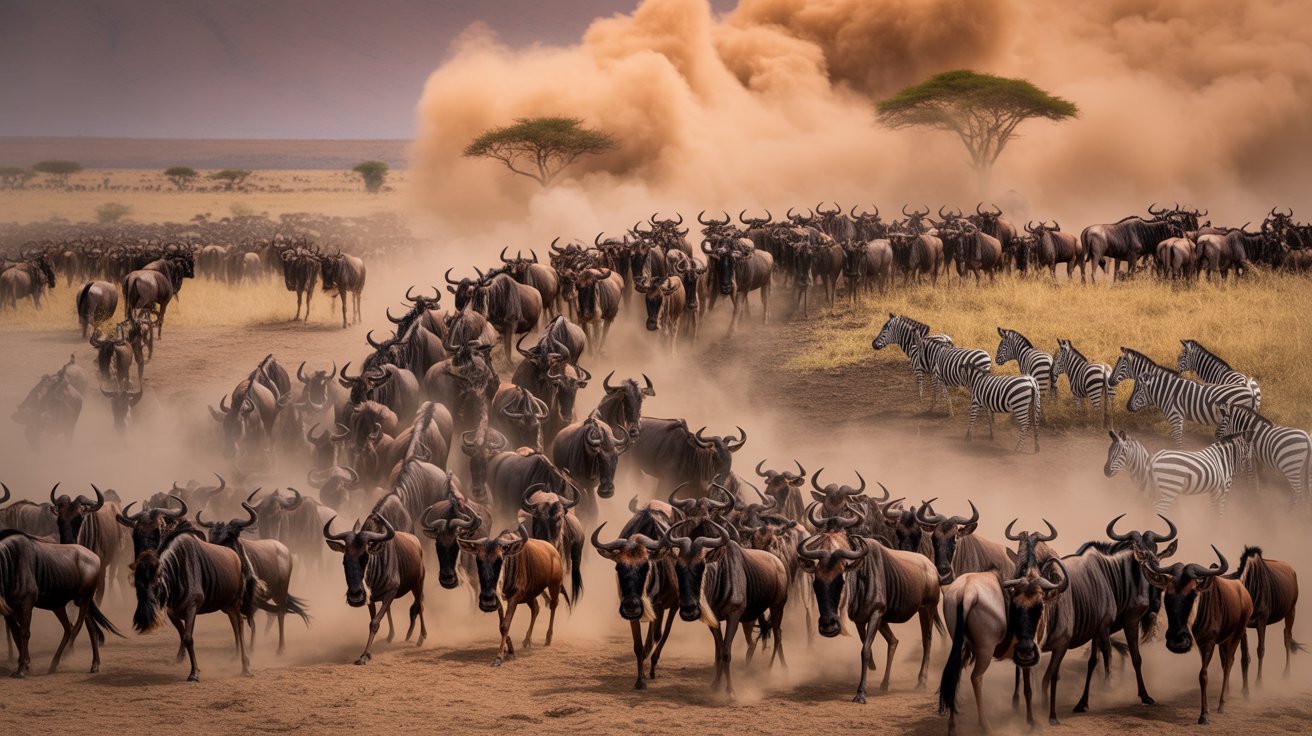
The Great Wildebeest Migration is one of the most extraordinary natural events on Earth. Every year, over two million wildebeest, zebras, and gazelles move in a continuous circular journey across the plains of Tanzania and Kenya, driven by rainfall and fresh grazing.
Often called “The Greatest Wildlife Show on the Planet,” this migration is the heart of East Africa’s safari experience—and one of the main reasons travelers choose this region for a once-in-a-lifetime adventure.
What Exactly Is the Great Migration?
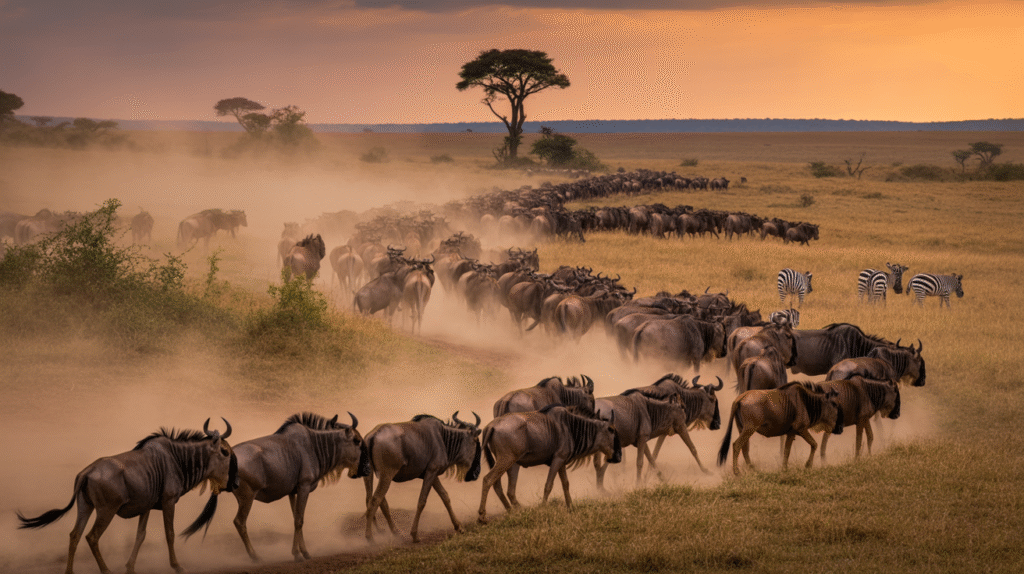
The Great Migration is a year-round movement of wildlife within the Serengeti–Masai Mara ecosystem. It is not a single event, but a constant cycle of:
- Grazing
- Calving
- River crossings
- Predator encounters
At its core are:
- Wildebeest (around 1.5–2 million)
- Zebras (300,000+)
- Gazelles (hundreds of thousands)
These animals move in search of rain, water, and fresh grass, followed closely by predators such as lions, leopards, cheetahs, hyenas, and crocodiles.
Where Does the Great Migration Take Place?
The migration occurs across a vast area in northern Tanzania and southwestern Kenya:
- Southern Serengeti & Ndutu (Tanzania)
- Central Serengeti (Tanzania)
- Western Serengeti (Tanzania)
- Northern Serengeti (Tanzania)
- Masai Mara (Kenya)
This ecosystem covers nearly 30,000 square kilometers, making it one of the largest intact wildlife regions on the planet.
The Migration Cycle: Month-by-Month
January – March: Calving Season (Southern Serengeti & Ndutu)
- Around 500,000 calves are born within a few weeks
- Excellent predator action
- Best time for photography and dramatic wildlife moments
April – May: Moving North (Central Serengeti)
- Herds begin migrating north
- Lush landscapes, fewer tourists
- Green season with stunning scenery
June – July: Western Corridor
- Herds gather near the Grumeti River
- First river crossings
- Crocodiles and predators become active
August – October: Mara River Crossings (Kenya & Northern Serengeti)
- Most famous phase of the migration
- Dramatic river crossings filled with danger
- Peak safari season
November – December: Return South
- Short rains trigger the return journey
- Herds move back into the Serengeti
- Less crowded and excellent wildlife viewing
Why Is the Great Migration So Special?
The Great Migration is unique because:
- It involves millions of animals
- It happens naturally, without fences
- It includes dramatic predator-prey interactions
- It is constant and cyclical, not a one-day event
No zoo, documentary, or photograph can compare to seeing this phenomenon in person.
Which Country Is Better for the Great Migration: Kenya or Tanzania?
Tanzania
- Longer migration season
- Calving season occurs here
- Fewer crowds
- Best for extended safaris
Kenya
- Famous river crossings
- Shorter but dramatic season
- Excellent predator action
Best choice depends on timing, and at East Africa Wild, we help you choose the perfect location based on when you travel.
When Is the Best Time to See the Great Migration?
| Experience | Best Time |
|---|---|
| Calving season | January – March |
| Green landscapes | April – May |
| River crossings | July – October |
| Fewer crowds | November – December |
How East Africa Wild Helps You Experience the Migration
At East Africa Wild, we design safaris around real-time wildlife movements, not fixed calendars.
We offer:
- Customized migration itineraries
- Expert guides who track herd movements daily
- Strategic camps near key crossing points
- Options for road or fly-in safaris
Our goal is simple: put you in the right place at the right time.
Frequently Asked Questions (FAQs)
Is the Great Migration guaranteed to be seen?
The migration is continuous, but exact locations depend on rainfall. With expert planning, sightings are extremely likely.
Do wildebeest cross rivers every day?
No. River crossings are unpredictable. They can happen multiple times a day or not at all—but that unpredictability is part of the magic.
Is the Great Migration dangerous for the animals?
Yes. Thousands of animals die each year due to predators, drowning, and exhaustion. It is a powerful example of nature’s raw reality.
Can I see the migration without crowds?
Yes. By choosing Tanzania or traveling outside peak months, East Africa Wild can plan quieter, equally rewarding experiences.
Is the Great Migration suitable for first-time safari travelers?
Absolutely. It’s one of the most unforgettable introductions to African wildlife.
Final Thoughts
The Great Wildebeest Migration is more than a safari highlight—it’s a living, moving symbol of Africa’s wild heart. From thundering hooves to tense river crossings and newborn calves taking their first steps, every moment is unforgettable.
With East Africa Wild, you don’t just witness the migration—you experience it in the most authentic, meaningful way possible.