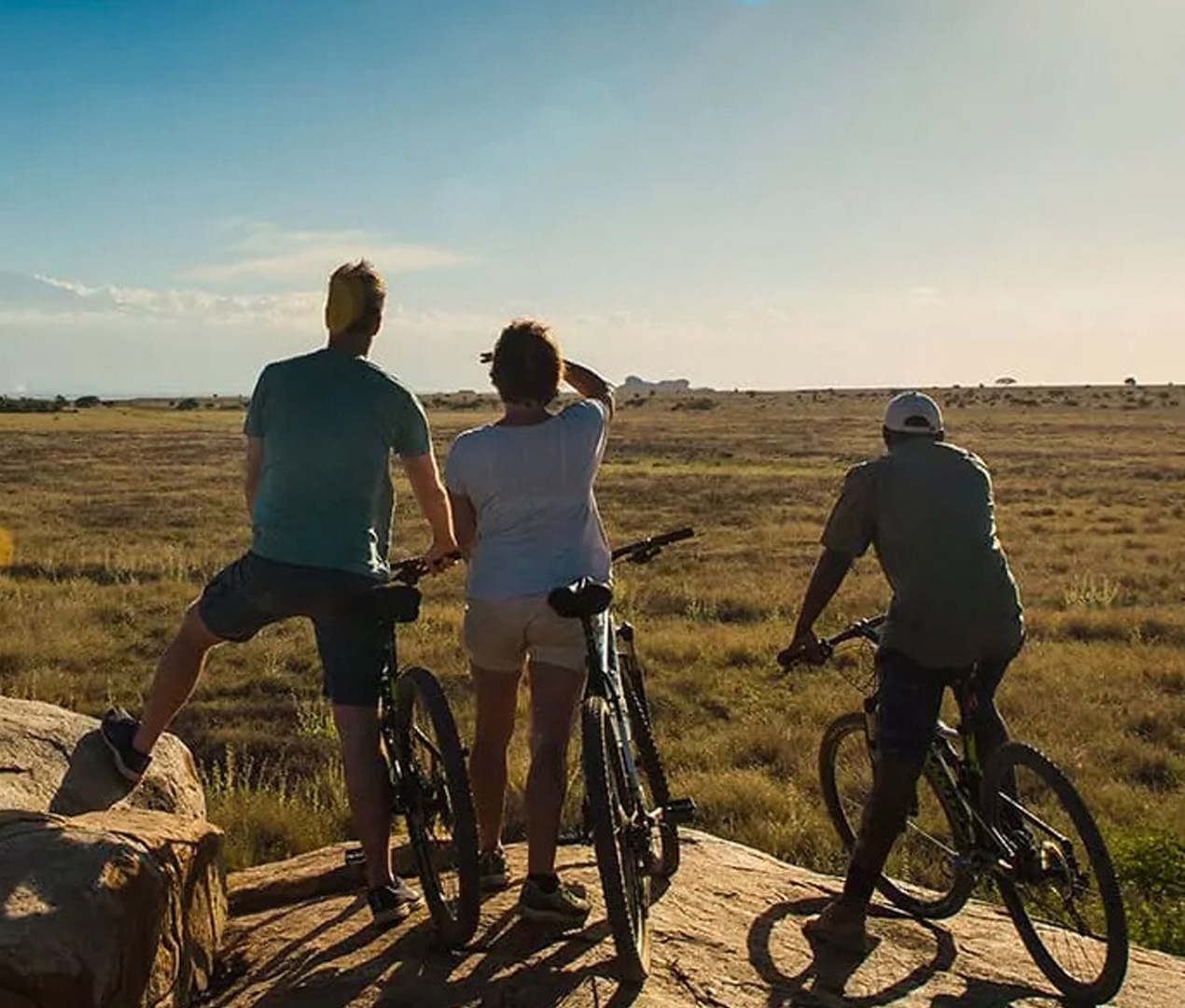
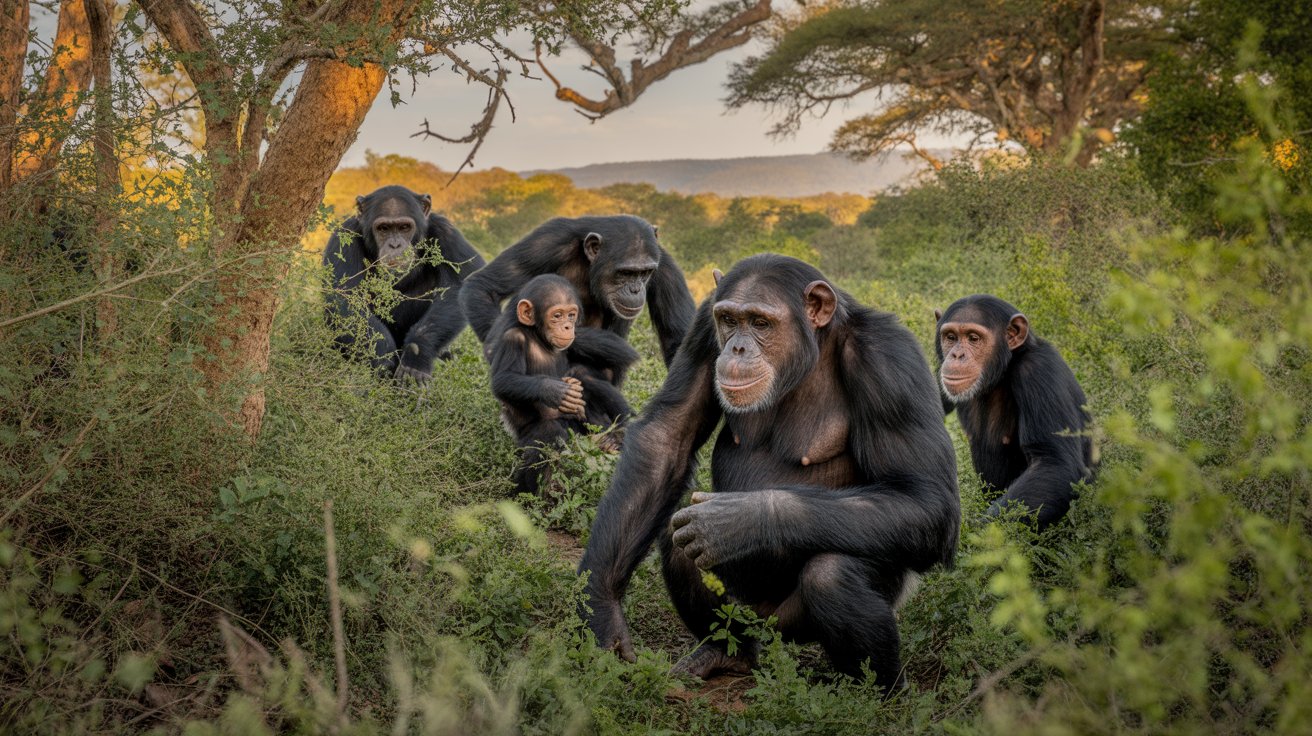
When people think of an East African safari, they usually imagine lions stalking prey on the savannah or elephants moving in large herds across open plains. But East Africa is also home to some of our closest living relatives—chimpanzees. Watching chimpanzees in the wild is an intense, emotional, and deeply educational experience. Their intelligence, social behavior, and human-like expressions make every encounter unforgettable.
This leads many travelers to ask:
Can you see chimpanzees in East Africa?
The answer is yes—you absolutely can, and East Africa is one of the best places in the world to see wild chimpanzees. However, chimpanzee trekking is very different from traditional safari game drives. It takes place in dense forests, involves hiking, and requires special permits.
This complete guide by East Africa Wild explains where, how, and when you can see chimpanzees in East Africa—and what to expect from this remarkable adventure.
Where Can You See Chimpanzees in East Africa?
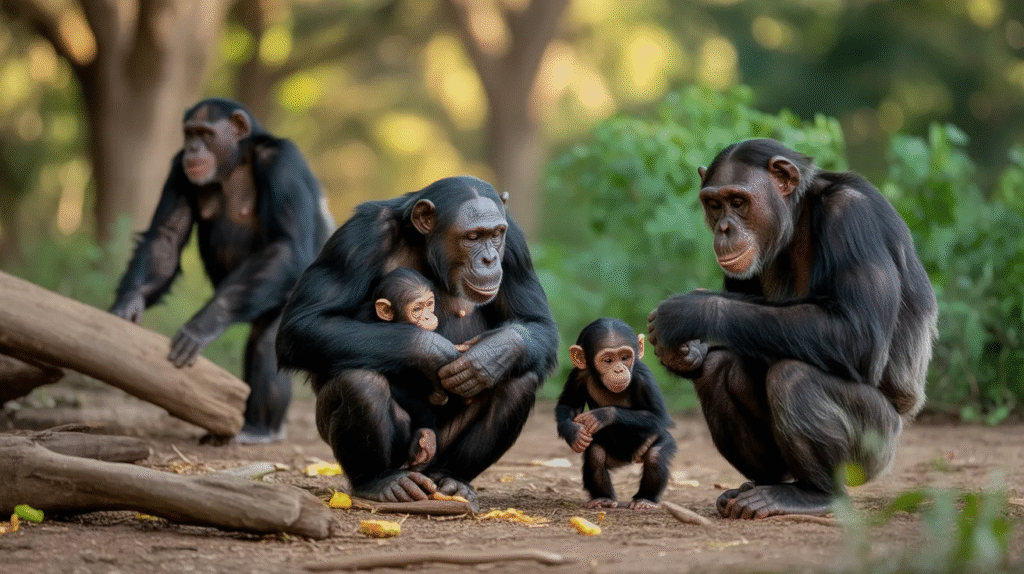
Chimpanzees live in forested areas, not open savannahs. In East Africa, the best and most reliable chimpanzee trekking destinations are found in Uganda, Tanzania, and Rwanda.
Uganda – The Best Chimpanzee Destination
- Kibale Forest National Park (top choice)
- Budongo Forest
- Kyambura Gorge (Queen Elizabeth National Park)
Uganda has the largest chimpanzee population in East Africa, making sightings very likely.
Tanzania – Remote and Wild
- Mahale Mountains National Park
- Gombe Stream National Park
These parks offer dramatic scenery and a true wilderness experience.
Rwanda – Short and Exclusive
- Nyungwe Forest National Park
Ideal for travelers with limited time or those combining chimp trekking with gorillas.
What Is Chimpanzee Trekking?
Chimpanzee trekking is a guided forest walk led by trained rangers to locate a habituated chimpanzee group.
How the Experience Works
- Early morning or afternoon start
- Small trekking groups
- Guided by expert trackers
- Trek duration: 1–4 hours
- Time with chimps: around 1 hour
Chimpanzees move fast and spend time in trees, so trekking can be energetic and exciting.
Is It Safe to See Chimpanzees?
Yes. Chimpanzee trekking is safe when conducted by professional operators and park authorities.
Safety Measures
- Rangers monitor chimp behavior
- Visitors receive detailed briefings
- Minimum distance rules enforced
- Group sizes strictly limited
East Africa Wild ensures guests are fully briefed and accompanied by experienced guides at all times.
How Difficult Is Chimpanzee Trekking?
Chimpanzee trekking is generally moderate in difficulty, but it can be physically demanding.
What to Expect
- Uneven forest trails
- Muddy ground
- Steep slopes in some areas
- Fast-paced walking
Chimpanzees move quickly, so fitness helps. However, most travelers with reasonable fitness can complete the trek comfortably.
Best Time to See Chimpanzees in East Africa
Chimpanzees can be seen year-round, but certain seasons offer better conditions.
Dry Seasons (Best Time)
- June to September
- December to February
Benefits:
- Easier hiking
- Less mud
- Better forest visibility
Wet Seasons
- March to May
- October to November
Benefits:
- Lush scenery
- Fewer tourists
- Slightly more challenging trekking
Chimpanzee Permits and Costs
A permit is required to track chimpanzees.
Permit Costs (Approximate)
- Uganda: USD 200–250
- Rwanda: USD 150
- Tanzania: USD 100–150
Permits are limited daily and should be booked in advance. East Africa Wild arranges all permits on your behalf.
What to Pack for Chimpanzee Trekking
Proper gear makes your trek much more enjoyable.
Essential Items
- Hiking boots with good grip
- Long-sleeved shirts and trousers
- Rain jacket
- Hat and sunscreen
- Insect repellent
- Camera (no flash)
- Gloves for grabbing vegetation
Chimpanzees vs Gorillas: What’s the Difference?
Many travelers ask whether to see chimpanzees or gorillas—or both.
| Feature | Chimpanzees | Gorillas |
|---|---|---|
| Movement | Fast, energetic | Calm, slow |
| Location | Trees & ground | Mostly ground |
| Trek difficulty | Moderate | Moderate–challenging |
| Experience | Dynamic, playful | Emotional, peaceful |
East Africa Wild recommends combining both for a complete primate safari.
Can You Combine Chimpanzees with a Classic Safari?
Yes, and it’s highly recommended.
Popular combinations:
- Kibale chimps + Queen Elizabeth safari
- Chimpanzees + gorillas in Uganda
- Chimpanzees + Serengeti migration
East Africa Wild specializes in multi-experience itineraries.
Conservation and Responsible Tourism
Chimpanzees are endangered due to habitat loss and poaching.
How Your Visit Helps
- Funds conservation programs
- Supports ranger salaries
- Protects forest habitats
- Supports local communities
Responsible tourism helps ensure chimpanzees survive for future generations.
What Makes Seeing Chimpanzees Special?
Chimpanzees share nearly 99% of our DNA.
Watching them:
- Communicate with sounds and gestures
- Use tools
- Care for young
- Display emotions
Many travelers find chimpanzee encounters surprisingly emotional and eye-opening.
Frequently Asked Questions (FAQs)
Are chimpanzee sightings guaranteed?
Sightings are not 100% guaranteed, but success rates are very high—often over 90%.
How close can you get to chimpanzees?
You must keep a safe distance, usually around 7–10 meters.
Is chimpanzee trekking suitable for children?
Most parks require a minimum age of 12–15 years.
Can I take photos?
Yes, but flash photography is strictly prohibited.
How long does the experience last?
The entire activity usually takes half a day.
Is trekking safe for solo travelers?
Yes. Treks are guided and very safe.
Final Thoughts
Yes—you can see chimpanzees in East Africa, and it is one of the most exciting and educational wildlife experiences the region offers. Unlike savannah safaris, chimpanzee trekking immerses you in dense forests and brings you face-to-face with animals that behave in strikingly human ways.
With expert guides, proper permits, and ethical practices, East Africa Wild ensures your chimpanzee trekking adventure is safe, responsible, and unforgettable.
If you want a safari that goes beyond game drives and connects you deeply with nature, chimpanzee trekking deserves a place on your East African journey.